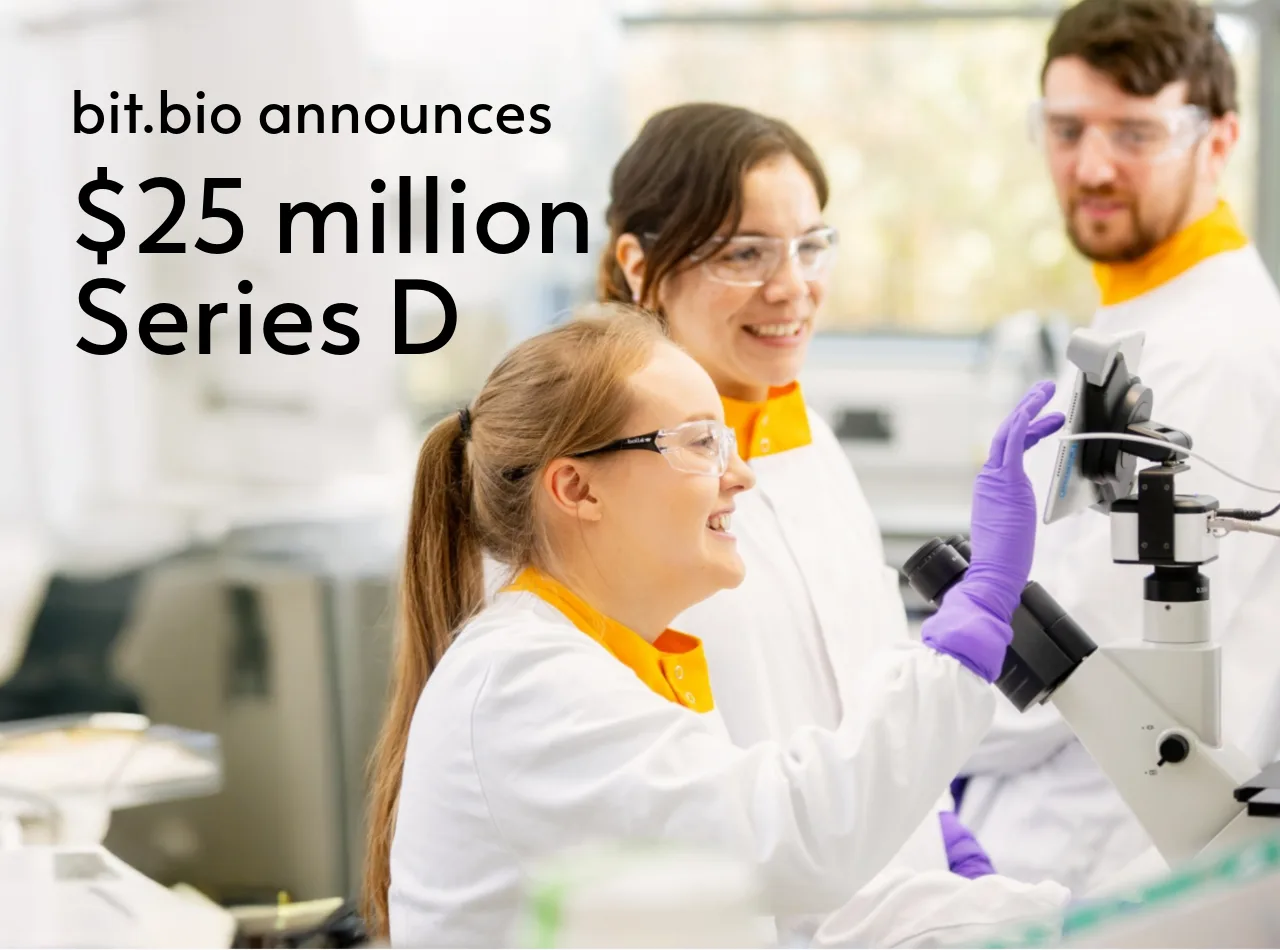
bit.bio, a Cambridge, UK company that makes programmed human cells for drug discovery, has raised $25m in a Series D round. The company announced the round on 4 November 2026.
Existing investor M&G Investments took part, along with Jonathan Milner, the founder and former chief executive of Abcam, the Cambridge antibody company. bit.bio did not name a lead investor or disclose a valuation.
The round comes shortly after a Series C that bit.bio raised earlier in 2026, the amount of which the company did not give in its announcement.
“We already have the technology and manufacturing capacity in place.”Emma Pepperell, CEO, bit.bio
What bit.bio makes
bit.bio's opti-ox technology turns stem cells into specific, defined human cell types, and the company says it can do so consistently and at scale. It sells the results as ioCells, a range of more than 50 cell types that includes heart, liver and central nervous system cells.
Drug developers and academic labs use the cells for drug discovery, disease research, functional genomics and toxicology testing. Human cell models can stand in for some animal testing and give researchers results that are closer to human biology.
Chief executive Emma Pepperell said in the announcement that the industry is reaching an inflection point in drug discovery. She linked growing demand for human cell models to two trends: AI speeding up the discovery of drug candidates, and the move towards alternatives to animal testing. "Someone needs to be able to supply those cells at scale," she said.
Growing demand
bit.bio gave several measures of growth for 2026 so far. Paid vial volumes are up 76%, orders are up 34%, active customers are up 40% and academic customers are up 63%, the company said. It did not disclose revenue.
"We already have the technology and manufacturing capacity in place," Pepperell said.
Cornel Chiriac, an investment director on M&G's Crossover team, said bit.bio has proven technology, established manufacturing and growing customer demand.
Why human cells
The announcement set out the problem bit.bio is trying to solve. Researchers need reliable lab systems to predict how drug candidates will behave in people, but differences between animal and human biology limit how much animal models can tell them. That has increased interest in human cell models that can reduce reliance on animal experiments.
Cells taken from human donors vary from one donor to the next and are in limited supply. bit.bio says its opti-ox platform gets around both problems by producing the same defined cell type every time, in large quantities.
Milner compared bit.bio's prospects with those of Abcam, which grew into a major supplier of research antibodies. "I see bit.bio doing that for human cells," he said, adding that progress depends on having the right human cells, in the right quantities, with consistency researchers can trust.
What the money is for
bit.bio said it will use the funding to expand its range of cell types, bring more of them to market and make its models available to more researchers, including pharmaceutical companies, biotechnology businesses and research organisations. Tech.eu reported that the money will also drive commercial growth while supporting the development and testing of new medicines.
The company did not give its headcount, founding year or total funding to date in the announcement.
Company website: bit.bio