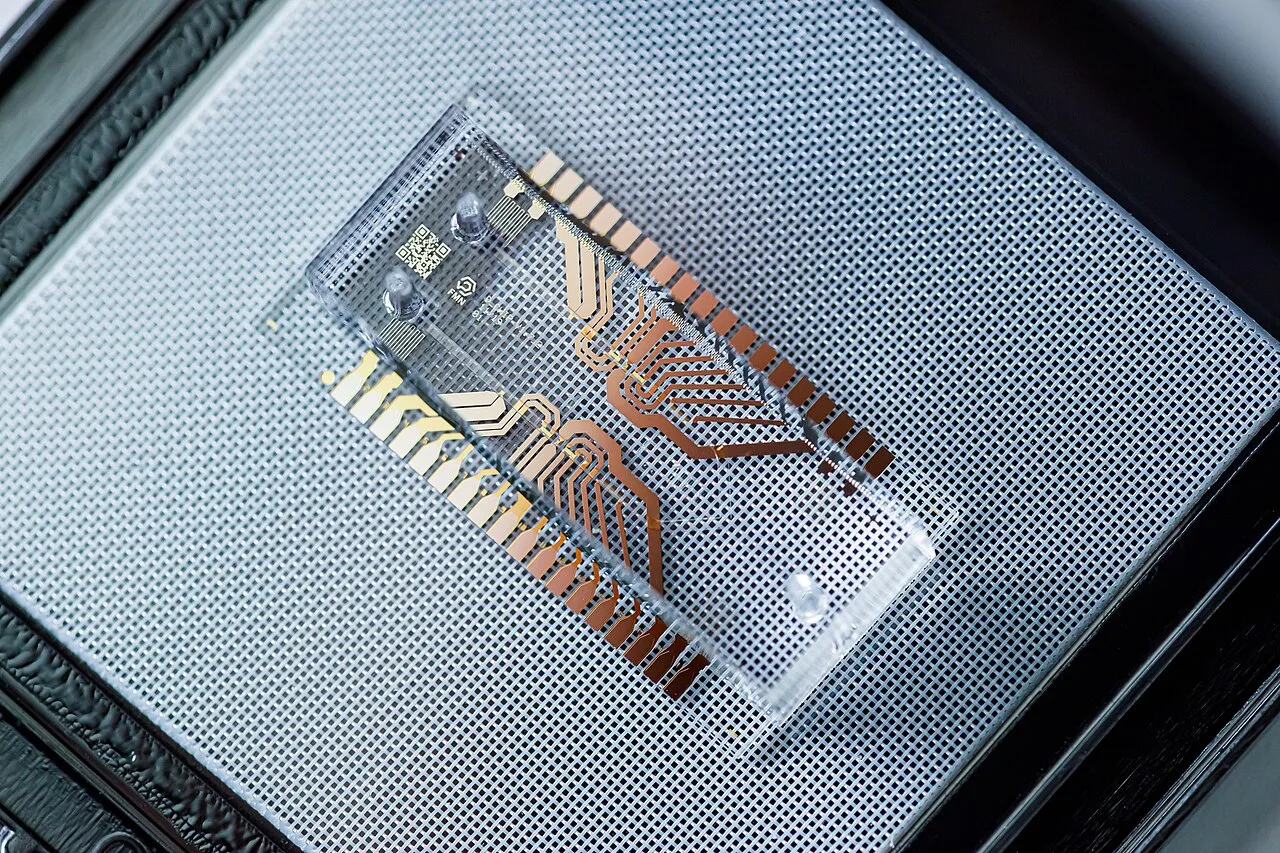
DropGenie, a biology company based in Montreal and Boston, has secured $5m (about C$7m) in Seed+ financing after BDC Capital's Thrive Venture Fund joined the round. The company announced the investment on 26 October 2026.
BetaKit reported that Skeleton Key, a Massachusetts-based firm, had led the financing. Merck Global Health Innovation Fund, CQDM, Real Ventures and Anges Québec also took part. The company did not disclose a valuation.
“Primary human cells hold the answers drug developers need, but they've been too scarce to study at scale,”Alison Hirukawa, Co-founder and CEO, DropGenie
What DropGenie does
Drug developers want to run experiments on primary cells taken directly from patients, which behave more like human tissue than lab-grown cell lines, but those cells are scarce. DropGenie's automated platform uses digital microfluidics, moving tiny droplets of liquid around a chip with electrical signals, so that lab work can be done with far smaller samples.
Its first product shrinks gene editing workflows so that edits can be made directly in primary patient cells using up to 100 times fewer cells and much less reagent than conventional methods. The company says the product is already being built into workflows at major pharmaceutical, biotech and research organisations.
Chief executive Alison Hirukawa told BetaKit that much early-stage discovery work is still done by hand, and that reducing the volume of expensive, bespoke materials changes the cost of experiments.
Background
BetaKit reported that DropGenie was founded in 2018, when Hirukawa, then a postdoctoral fellow at McGill University's Goodman Cancer Research Centre, met co-founders Hugo Sinha and Philippe Vo through a McGill research project on digital microfluidics.
Customers can run DropGenie's protocols in their own labs, pay the company to run studies as a service, or form data partnerships that build standardised datasets from primary patient cells. The company says it is working with partners ahead of a broader rollout early next year.
The company says its platform supports work in cell therapy, functional genomics and AI-driven drug development. Hirukawa told BetaKit the long-term goal is to unlock new therapies and make personalised medicines possible by building the automation systems behind them.
Who invested and what the money is for
BDC's $350m Thrive Venture Fund invests in Canadian technology companies led by women, from pre-seed to Series B, and will take a board seat at DropGenie.
The money will go towards commercialising the first gene editing product and expanding the ways customers can use the platform. Mona Minhas, managing partner of the Thrive fund, said DropGenie was building infrastructure that makes human-relevant biological data easier to access and scale, which the fund sees as important for AI-driven drug discovery.
Ann Lai, managing partner of Skeleton Key, said the firm looks for science companies that speed up discovery with new technology.
Minhas said the fund sees an opportunity to build a globally important company from Canada, and Lai said Skeleton Key was pleased to have the Thrive fund join the board in support of a Canadian deep-tech company.
Company website: dropgenie.com