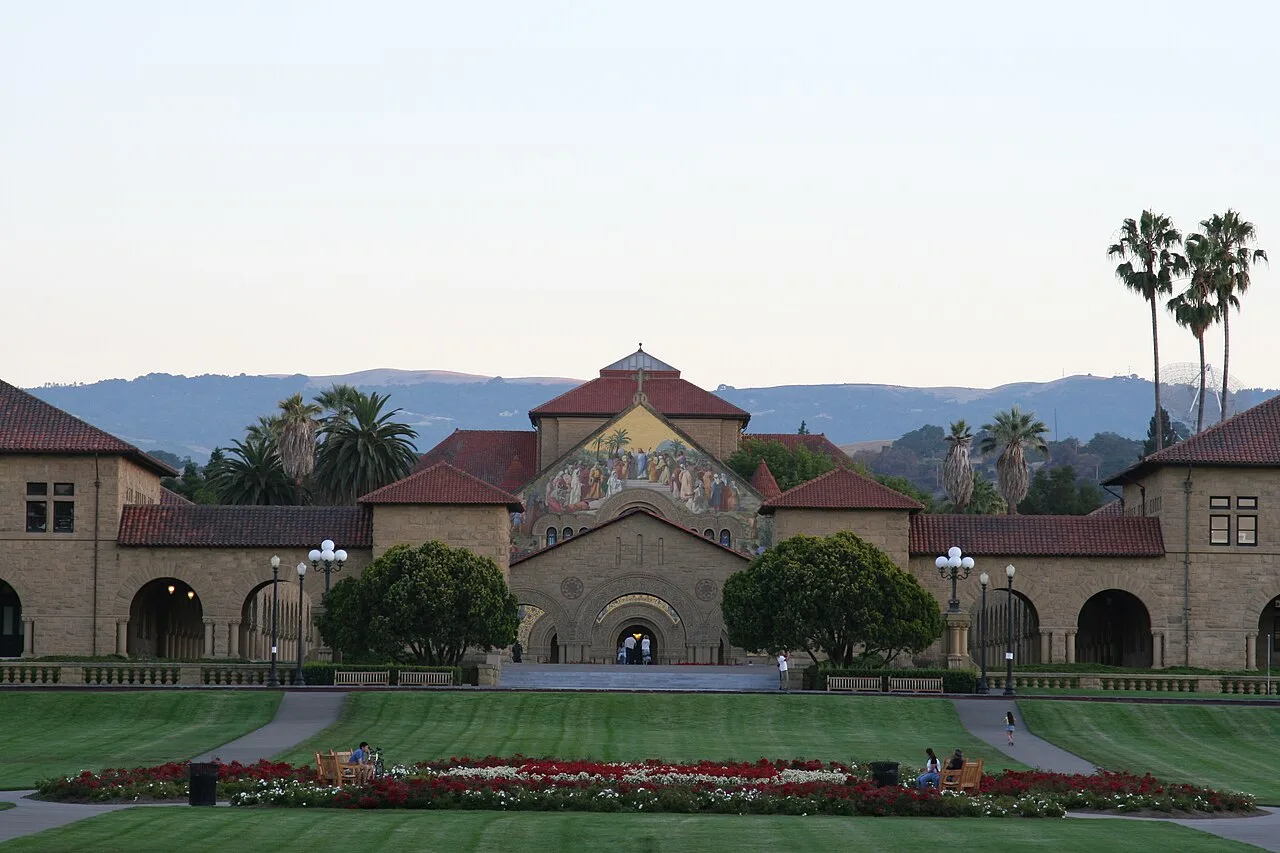
Noeri, an AI lab founded this year by Stanford computer science professors Yejin Choi and Carlos Guestrin, launched on 16 November 2026 with $110m in funding led by Menlo Ventures.
Madrona Venture Group, Kindred Ventures, Wing Venture Capital and NEA also invested, and Cisco Investments, Nvidia and Snowflake joined as strategic investors. Bloomberg first reported the round, according to GeekWire and TNW.
Noeri did not disclose a valuation, and it did not attach a stage label such as seed or Series A to the money. The company is based in Palo Alto and has an office in Zurich.
“Every company we talk to is riding the same curve: pay more for the best model, or settle for worse results from a cheaper one.”Carlos Guestrin, Co-founder and Co-CEO, Noeri
What Noeri builds
Noeri argues that most AI models stop learning once training ends. Its systems are meant to keep improving while they work. The software studies a company's data and workflows, then adjusts everything around a given task: the instructions, the tools, which model handles each step and, where it is worth it, the models themselves. Each change comes with an explanation and goes to a person for sign-off, in the way code changes are reviewed.
The approach works with both closed and open-weight models. Customers keep ownership of their data and of the workflows and models they build, subject to the licences of any third-party models. Noeri also wants to apply the same methods to research, with AI that proposes hypotheses and runs experiments on problems such as new molecules and proteins.
Guestrin said in the announcement that companies face a choice between paying for the strongest model and accepting weaker results from a cheaper one, and that specialised AI could improve that trade-off. Noeri said it is working with partners across several industries, some of them investors, but did not name customers.
The founders
Choi and Guestrin, who serve as co-CEOs, worked together at the University of Washington before moving to Stanford. Choi is a MacArthur Fellow and a former senior director at the Allen Institute for AI. According to GeekWire, she left UW and Ai2 in 2024 to become a distinguished scientist at Nvidia, a role she held until starting Noeri in May.
Guestrin co-founded Turi, the machine learning company Apple bought in 2016, and went on to lead Apple's central machine learning and AI organisation. He also co-created XGBoost, a widely used open-source machine learning library. GeekWire noted that Madrona and NEA led a $6.75m round in GraphLab, the company that became Turi, in 2013.
According to TNW and GeekWire, both citing Bloomberg, the idea came partly from work with a Stanford microbiology and immunology team, for which the founders built a small model that directed other AI models and outperformed GPT-5 on that team's research tasks.
A case for many models
The name Noeri means intelligence in the plural. In an essay published with the launch, Choi and Guestrin argued against a future in which a single, centrally owned AI system serves every company. Menlo Ventures partner Venky Ganesan said the firm moved quickly to lead because the founders were doing research and deploying it inside companies at the same time.
Noeri enters a field where other companies already help businesses tailor models. GeekWire, citing The Information, pointed to Thinking Machines Lab's fine-tuning tool Tinker and to Applied Compute. Noeri said it is hiring researchers and engineers in Palo Alto and Zurich.
Company website: noeri.ai