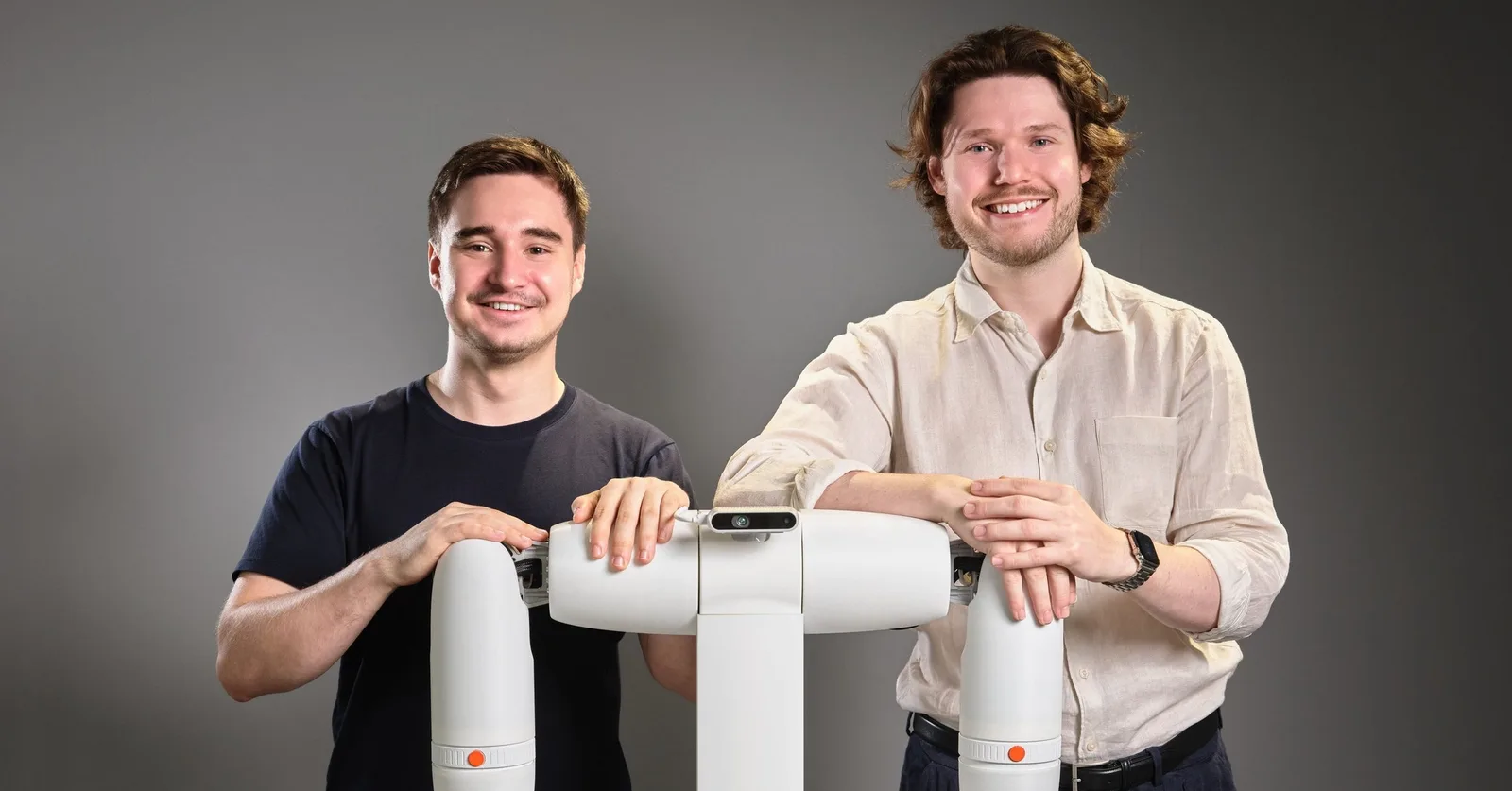
O-ID, a Tokyo startup building a modular humanoid robot for factories, said on 24 November 2026 that it had raised $1.2m (about ¥200m) in pre-seed funding.
TAWANI Ventures, Hustle Fund, Techstars and several angel investors took part. The company did not name a lead investor or disclose a valuation. The Japanese-language release included comments from William Pritzker, a partner at TAWANI Ventures. BRIDGE reported the round on 25 November.
The startup plans to show its next-generation robot at CES 2027 in Las Vegas in January and begin pilot deployments in factories early next year.
What O-ID builds
O-ID is designing an industrial humanoid in which the joints, limbs and hands are separate modules. If a part wears out, it can be swapped on site in a few minutes instead of the whole robot being taken out of service. Sensors and AI track wear on each part so that the company can ship replacements before a failure stops a line.
The robot is meant to work in existing production lines without changes to their layout. BRIDGE reported its reference specifications as 172cm tall with a 16kg payload.
O-ID is starting with car manufacturing and logistics in Japan, in jobs such as assembly, moving parts between processes, picking, sorting and packing. It plans to move into other industries and into the US later.
Founders and early partners
Chief executive Stian Jakobsen, who is from Norway and has a background in cybersecurity, founded the company with chief technology officer Simon Gormuzov, a mechanical and robotics engineer from the Netherlands with experience in industrial robots. The two met at Waseda University in Tokyo. The company was accepted into the Techstars Tokyo accelerator in the year it was founded.
O-ID's Japanese entity was registered in November 2025, and the company also has a US parent, O-ID, Inc. It has signed a letter of intent with Sumitomo Electric Industries to explore using Sumitomo's technology in wiring harnesses for humanoid robots, and has filed a provisional US patent application for its modular connector.
It did not disclose customers, revenue or headcount. The company is based in Nihonbashi, in Tokyo's Chuo ward. The Sumitomo agreement is exploratory, and O-ID did not say whether any carmaker or logistics company has agreed to a pilot.
What the money is for
O-ID said it would use the money to build the team needed to take its first model from prototype to mass production, starting with more engineers in Tokyo. It did not say how many people it plans to hire or how far the $1.2m will take it toward production.
The robot's modular design is central to that plan: O-ID argues that parts which can be replaced quickly, and failures that can be predicted, will keep its humanoids working on production lines with little downtime.
Company website: o-id.net