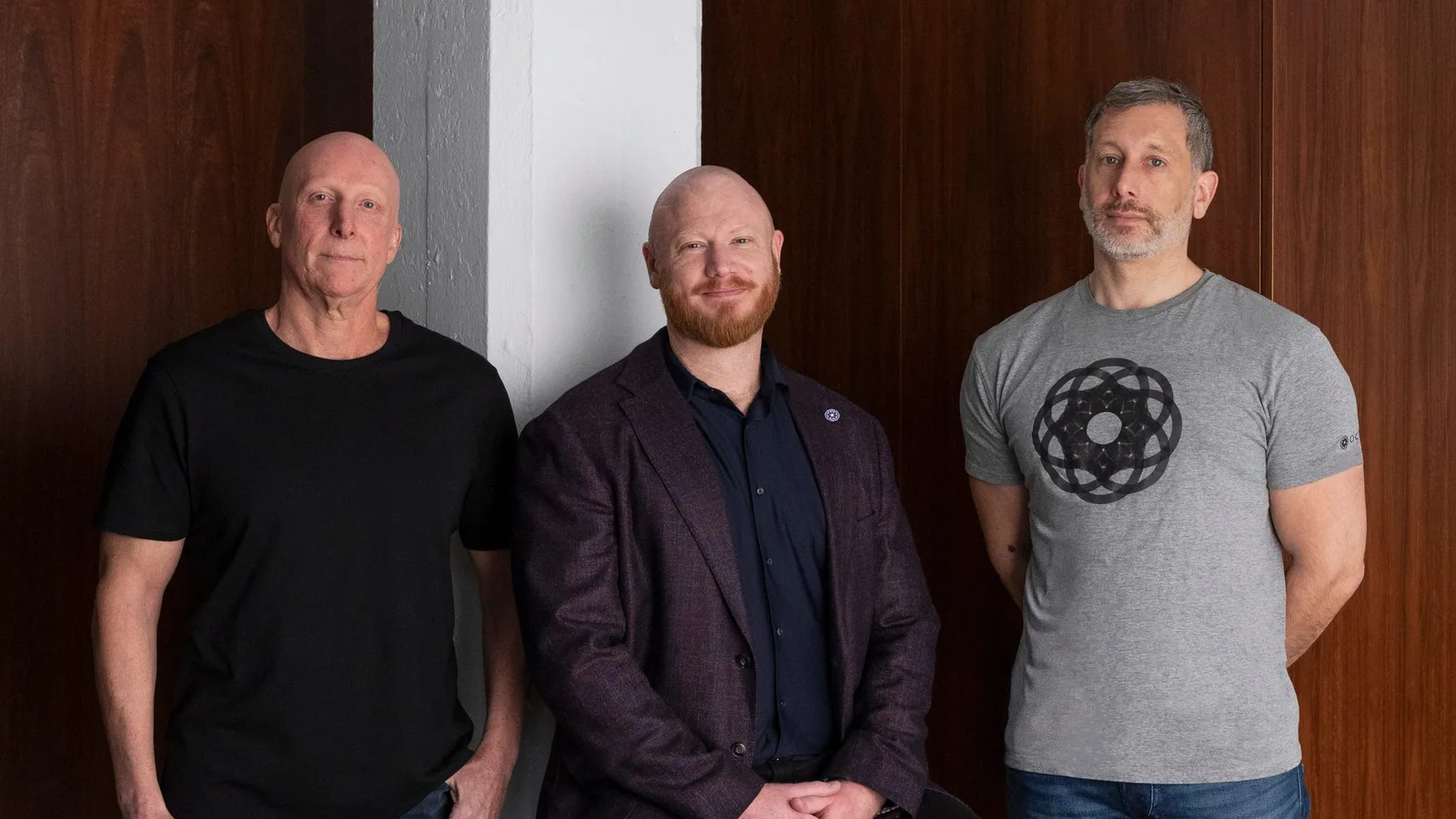
Q-CTRL, a Sydney company that makes software to control quantum computers and quantum sensors, raised US$290m (A$415m) in a Series C round led by Salesforce Ventures, it announced on 12 November 2026.
The company said the round was oversubscribed and was expanded twice to meet demand, and described it as the largest quantum-sector raise by a software-focused business. Bullhound Capital and Affinity Partners also took significant parts of the round.
Q-CTRL said the round made it the newest unicorn in the quantum sector but did not give a valuation. Startup Daily and SmartCompany reported that the company is valued at more than US$1bn, and Startup Daily's headline put the figure at $1.4bn. Both outlets gave the round's size as A$425m, slightly higher than the A$415m in the company's release.
“The hard problem in quantum is not building the machine, it is getting useful output from it.”Robert Keith, Partner, Salesforce Ventures
What Q-CTRL does
Q-CTRL was founded in 2017 by Michael J. Biercuk, a quantum physicist at the University of Sydney, according to Startup Daily. Its software uses AI to get more out of quantum hardware, and it is designed to work across machines from different makers.
Its main product is Ironstone Opal, a quantum navigation system meant to work when GPS signals are unavailable or jammed. The company says its software makes its sensitive quantum sensors perform 100 times better in the field than the best alternative, and that the system is being deployed on commercial aircraft with Airbus, on autonomous platforms with Lockheed Martin and on drones. Startup Daily reported that Q-CTRL won two DARPA quantum sensing contracts worth a combined US$24.4m in 2025, working with Lockheed Martin.
On the computing side, Robert Keith, a partner at Salesforce Ventures, pointed to a materials simulation that Q-CTRL ran on IBM hardware and that developers can now call from the IBM Quantum Platform.
Who invested
New investors were Affinity Partners, AMD Ventures, EDGE Group, MPower Partners, Australia's National Reconstruction Fund Corporation and SPARX Asset Management. Startup Daily and SmartCompany reported that the National Reconstruction Fund put in A$70m (about US$49m).
Returning investors included Alpha Edison, Alumni Ventures, Bullhound Capital, DCVC, In-Q-Tel, Lockheed Martin Ventures, Main Sequence, Ridgeline, Salesforce Ventures, Salus Ventures and Square Peg.
Per Roman, a founding partner of Bullhound and a Q-CTRL board member, said the company is one of few in quantum with paying customers and revenue, though no revenue figure was published. Square Peg said it has backed Q-CTRL since 2019, and MPower Partners said it would help the company grow in Japan.
What the money is for
Q-CTRL said it will put more into its software products and expand internationally to serve customers in sectors from finance to energy, while continuing work on autonomy and aerospace programmes. It has offices in Sydney, Los Angeles, San Francisco, Huntsville, Berlin and Oxford.
Biercuk said the investor group reflected the company's technology, revenue growth and links to sectors from AI to aviation.
The funding so far
According to Startup Daily, Q-CTRL raised $22m in a Series A in 2019. Its Series B began with $35m in late 2021, was extended by $39m in a round led by Salesforce Ventures in February 2023, and closed in October 2024 after an $88m top-up led by Bullhound, for a total of $166m. The outlet did not state which currency those amounts were in, and the company did not give a cumulative total.
Company website: q-ctrl.com