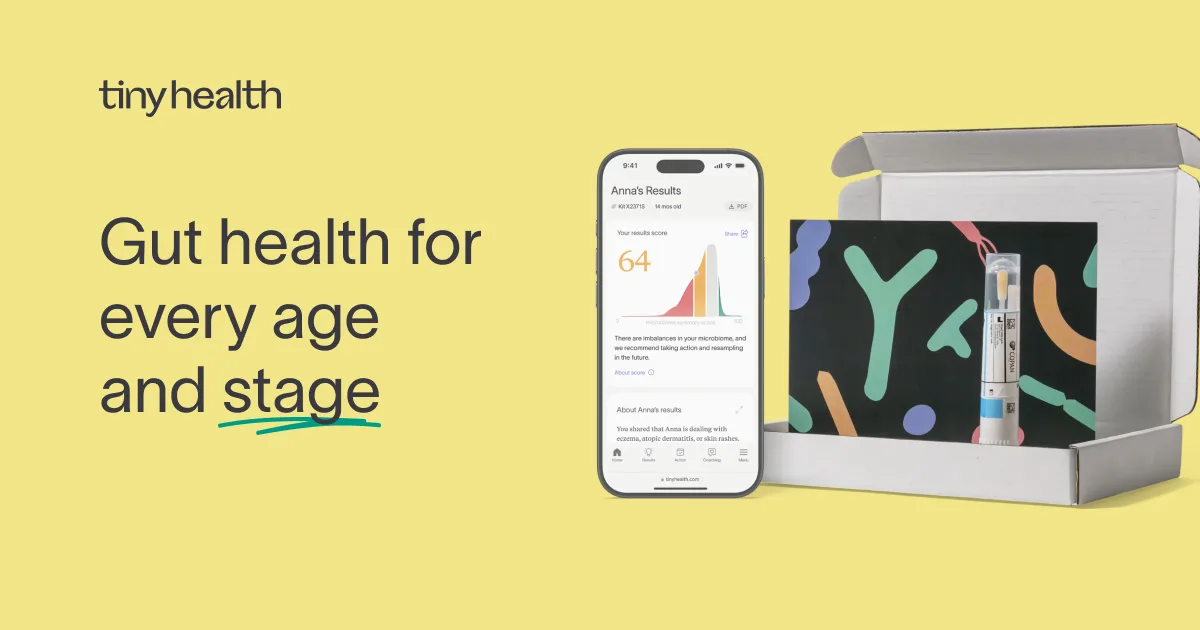
Tiny Health, an Austin, Texas, company that sells at-home gut and vaginal microbiome tests, raised an oversubscribed $33m Series B round led by B Capital, it announced on 29 September 2026. The round brought its total funding to $46m.
Existing investors Spero Ventures, The Venture City and Overwater Ventures took part, along with new backers Black Opal Ventures, Denver Ventures, Pave Health Ventures, Alumni Ventures, Gaingels and Pari Passu Ventures. The company did not disclose a valuation.
Alongside the raise, Tiny Health launched a $5m Microbiome Research Program to support outside researchers and clinicians studying the microbiome and ways to change it.
“We founded Tiny Health because the science is so impactful, the need is urgent, and no one else was building for the whole lifespan. What started as a solution for my own family has become the infrastructure for an entire industry.”Cheryl Sew Hoy, CEO and Founder, Tiny Health
What Tiny Health does
Tiny Health was founded in 2020 and launched in 2022 with a gut microbiome test for babies, as well as gut and vaginal tests for mothers. Founder and chief executive Cheryl Sew Hoy started the company after her first child developed eczema and a food allergy, according to MedCity News. The early focus was the first 1,000 days of life, when the gut microbiome changes most easily and can affect immune development.
The company has since moved beyond infant and maternal health. Adult tests now outnumber paediatric tests, and it has added tools aimed at longevity and healthy ageing, including a Gut Microbiome Age score. Tests are taken at home and cost about $249, according to MedCity News.
Tiny Health uses shotgun metagenomic sequencing and says it can detect microbes across more than 120,000 genomes down to the strain level. It built its own bioinformatics pipeline. The company says it serves nearly 200,000 customers and more than 6,000 healthcare practitioners.
Research and the B2B business
The company has published four scientific papers. A randomised controlled trial it published in 2025 in Pediatric Allergy and Immunology found that targeted microbiome interventions cut infants' odds of developing eczema by 83%, according to the company. It has finished recruiting for a second, larger trial and is extending its research to conditions including inflammatory bowel disease, Alzheimer's disease and cancer drug response.
Its enterprise platform, Powered by Tiny, lets other health businesses offer its tests. The company said the platform grew fourfold last year. Partners include Fullscript, Siphox, Superpower, Atria, Allina Health and the Mayo Health Executive Health and Longevity Clinic, and Tiny Health works with Stanford Medicine, Mount Sinai and Massachusetts General Hospital, according to Pulse 2.0.
What the money is for
Tiny Health said it would use the funding for clinical research and interventional studies, education for healthcare practitioners, and growth of Powered by Tiny. It is also building TinyAI, which it describes as an AI system trained on nearly 200,000 microbiome profiles that gives users guidance based on their results.
Nick Whitehead, a senior principal at B Capital, is joining the company's board. In a statement he described the gut microbiome as one of the most significant and underexplored areas of human health. Chief science officer Kimberley Sukhum said chronic conditions were often linked not only to harmful microbes but also to missing beneficial functions.
Other companies selling microbiome tests include Evvy and Viome, MedCity News noted.
Company website: tinyhealth.com