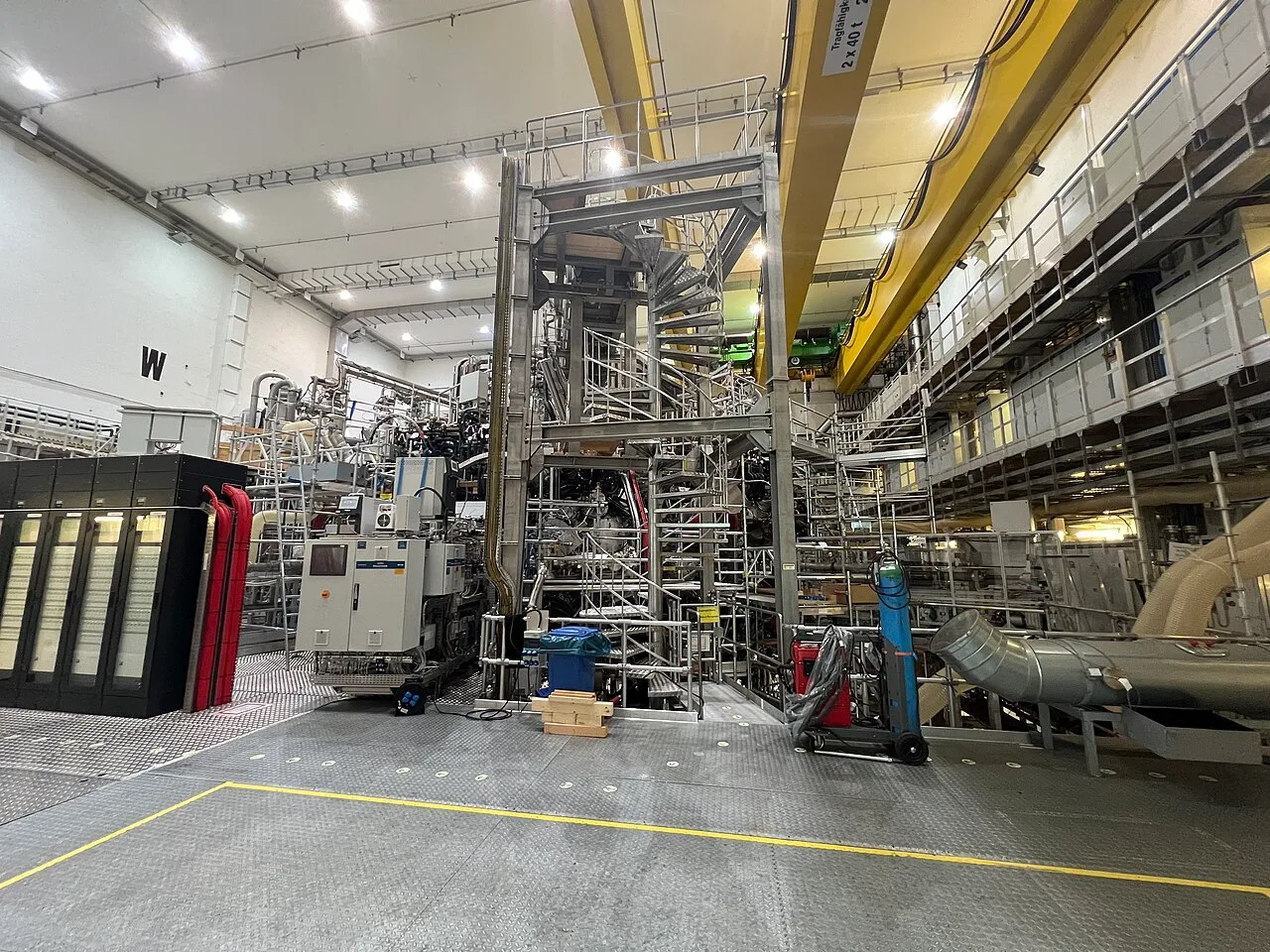
Type One Energy, a Knoxville, Tennessee company developing fusion power plants based on the stellarator design, raised $200m in a Series B round, it announced on 6 October 2026.
Breakthrough Energy Ventures and Clutterbuck Capital co-led the round. Lowercarbon Capital, Siemens Energy Ventures and SiteGround Capital joined as new investors, along with others that were not named.
Reuters reported that the round takes Type One's total funding to more than $400m and, citing PitchBook data, called it the third-largest Series B in the fusion sector over the past five years. The company did not disclose a valuation.
“Fusion is approaching the point where deployment, not discovery, defines the challenge.”Carmichael Roberts, Breakthrough Energy Ventures
What Type One Energy does
Founded in 2019, Type One is developing a stellarator, a type of fusion device that uses complex magnetic fields to hold superheated plasma in place. It licenses high-temperature superconducting magnet technology from Commonwealth Fusion Systems, which TechCrunch said will form the backbone of its reactor design.
The company describes its plan as Project Infinity, sited at the Tennessee Valley Authority's Bull Run site in East Tennessee. It includes Infinity One, a stellarator engineering prototype, and Infinity Two, a planned 400 MW commercial fusion power plant. The round followed the company's receipt of an initial fusion operating licence for Project Infinity from the State of Tennessee.
Chief executive Christofer Mowry told TechCrunch the goal is to bring the first plant online by 2034. The engineering group AECOM is working on Infinity Two. Type One is also pursuing a project in the UK through the UK Infinity Fusion Consortium with Tokamak Energy, AECOM, Sheffield Forgemasters and Barclays.
An integrator, not a manufacturer
Type One designs the plant and many of its components but plans to have a network of outside suppliers build them, rather than putting up its own factories. Mowry told TechCrunch that this keeps the company's capital needs "just a different order of magnitude than if you were going to be vertically integrated".
"Why would I want to spend on bricks and mortar?" he told the publication, adding that he used to run a large nuclear manufacturing company. TechCrunch noted that the approach lowers manufacturing risk for the company but leaves it dependent on how well it manages its suppliers.
Mowry told Reuters the project was not "an experimental science project", and that the company mainly needs to show that its machine design works as planned.
Who invested
Breakthrough Energy Ventures is a returning investor; TechCrunch reported that Type One had earlier raised $82.5m in an extended Series A. "Fusion is approaching the point where deployment, not discovery, defines the challenge," said Carmichael Roberts of Breakthrough Energy Ventures.
Siemens Energy Ventures brings an industrial backer to the cap table. Reuters reported that Type One aims to work towards a manufacturing partnership with Siemens. Enrique Gonzalez Zanetich, a partner at Siemens Energy Ventures, said in a statement that fusion could become an important source of reliable, low-carbon energy at scale.
What the money is for
Type One said the money will fund continued development of its stellarator technology and the execution of Project Infinity, including the Infinity One prototype. Reuters reported that the Infinity Two plant is targeted within a decade, while Mowry has given 2034 as the goal for bringing it online.
Company website: typeoneenergy.com