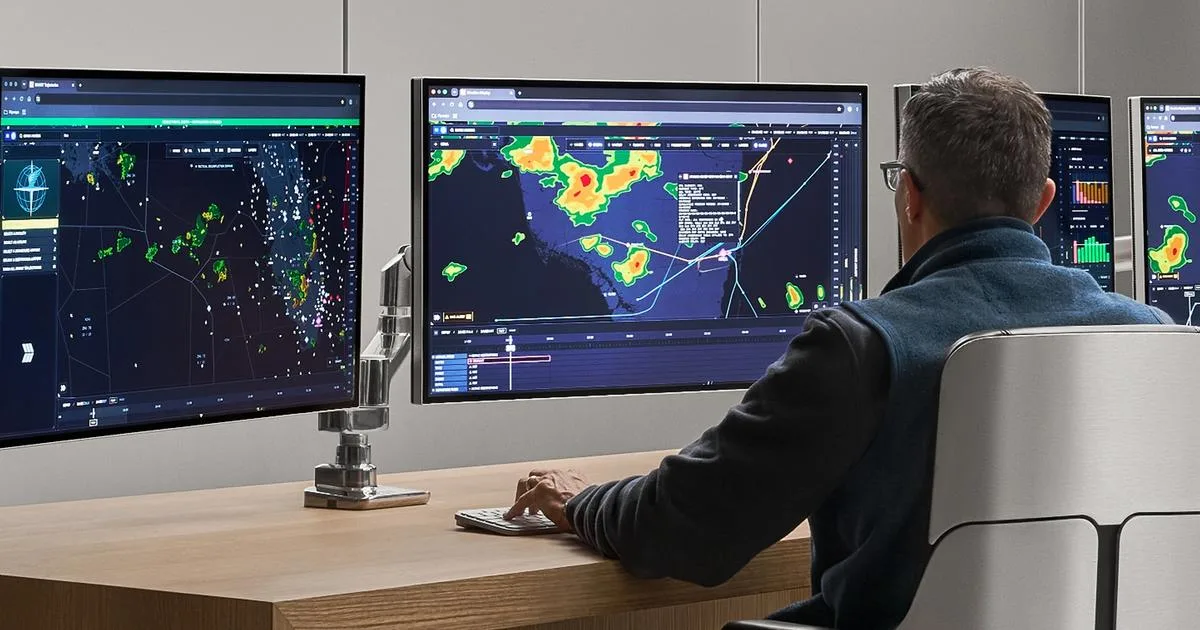
ASI, the Boston company previously known as Air Space Intelligence, has raised $325m in a Series C round that values it at $3bn. It announced the round on 20 October 2026.
Spark Capital led the round. Affiliates of Citadel Securities, Meritech Capital, Craft Ventures, Energy Impact Partners and Andreessen Horowitz also took part, the company said.
ASI did not say how much it had raised in total before this round. RuntimeWire, which reported the round, noted an earlier financing led by Andreessen Horowitz that Bloomberg covered in December 2023, but no amount for that round is given in the sources used here.
“ASI is deeply focused on AI systems that can manage and control physical assets”Phillip Buckendorf, Founder and CEO, ASI
What ASI does
ASI builds AI systems that forecast how complex physical networks will behave and help operators decide what to do next. Its founder and chief executive, Phillip Buckendorf, described the company in its announcement as focused on AI that can manage and control physical assets.
The company said its systems run continuous forward simulations that model operations hours, days and weeks ahead, mixing deterministic and probabilistic modelling, so that the people running air traffic control, power grids and military operations can catch problems early. RuntimeWire reported that Buckendorf began with software for airline flight dispatch before taking the product into air traffic management, defence and energy.
The company started in aviation, and airlines remain a core market. It named Delta, Alaska Airlines and United among its customers. It also works for the US government: ASI said it holds an $875m program of record with the Department of Transportation and the Federal Aviation Administration to modernise the National Airspace System, and a $99m contract with the US Army that includes work on the Army's Next Generation Command and Control effort. ASI said it is one of only four technology companies founded since 2000 to win a federal program of record that large. RuntimeWire described the Army deal as a five-year contract with a ceiling of $99m.
ASI said its software has supported more than 4,000 US Air Force operators and is deployed with US Pacific Command, and that those operators used it during Operation Epic Fury. In energy, it listed the utility National Grid as a customer. National Grid, which supplies gas and electricity to more than 20 million people in the north-eastern US, is using ASI's technology for electric grid planning and operations.
Who invested
Spark Capital general partner Clay Fisher called ASI a generational category creator. Craft Ventures partner Michael Robinson said the company is becoming the decision platform for the critical industries it serves.
Energy Impact Partners pointed to where it expects growth. Sameer Reddy, managing partner of the firm's Flagship fund, said utilities face rising electricity demand while upgrading the grid, and that ASI's technology helps National Grid prepare for disruption, from storm response to investment planning. "We see energy as a major growth opportunity for the company," Reddy said.
Anthony DeCamillo, head of growth investing at Citadel Securities, said the institutions behind America's most critical systems trust ASI to show them what is coming next.
What the money is for
ASI said it will use the funding to expand deployments in energy, logistics and what it calls tactical edge environments, meaning military settings in the field. It also plans to grow its research and engineering teams in Boston.
Besides its Boston headquarters, the company has offices in Washington DC, Denver and Europe. It has not disclosed its headcount or revenue.
The round values ASI at $3bn and gives it money to move beyond aviation and defence into energy and logistics, the two areas its investors singled out.
Company website: airspace-intelligence.com