Planet Savers, a Tokyo startup developing technology to capture carbon dioxide directly from the air, has raised ¥1.08bn (about $6.8m) in a pre-Series A round led by ANRI. The company announced the round on 20 November 2026.
Spiral Capital, JAFCO, DBJ Capital, Money Forward Venture Partners' HIRAC FUND and SG Incubate, a fund run by the Saibu Gas group, also took part. The shares were issued through a third-party allotment. No valuation was disclosed.
The company said the equity round, combined with newly awarded public funding, brings its latest intake to more than ¥1.6bn (about $10.1m). The public support comes from Japan's Ministry of the Environment, which chose the company for Phase 3 of its SBIR programme for environmental startups, and from two Tokyo Metropolitan Government schemes for green-transformation industries and carbon-removal credits.
What Planet Savers does
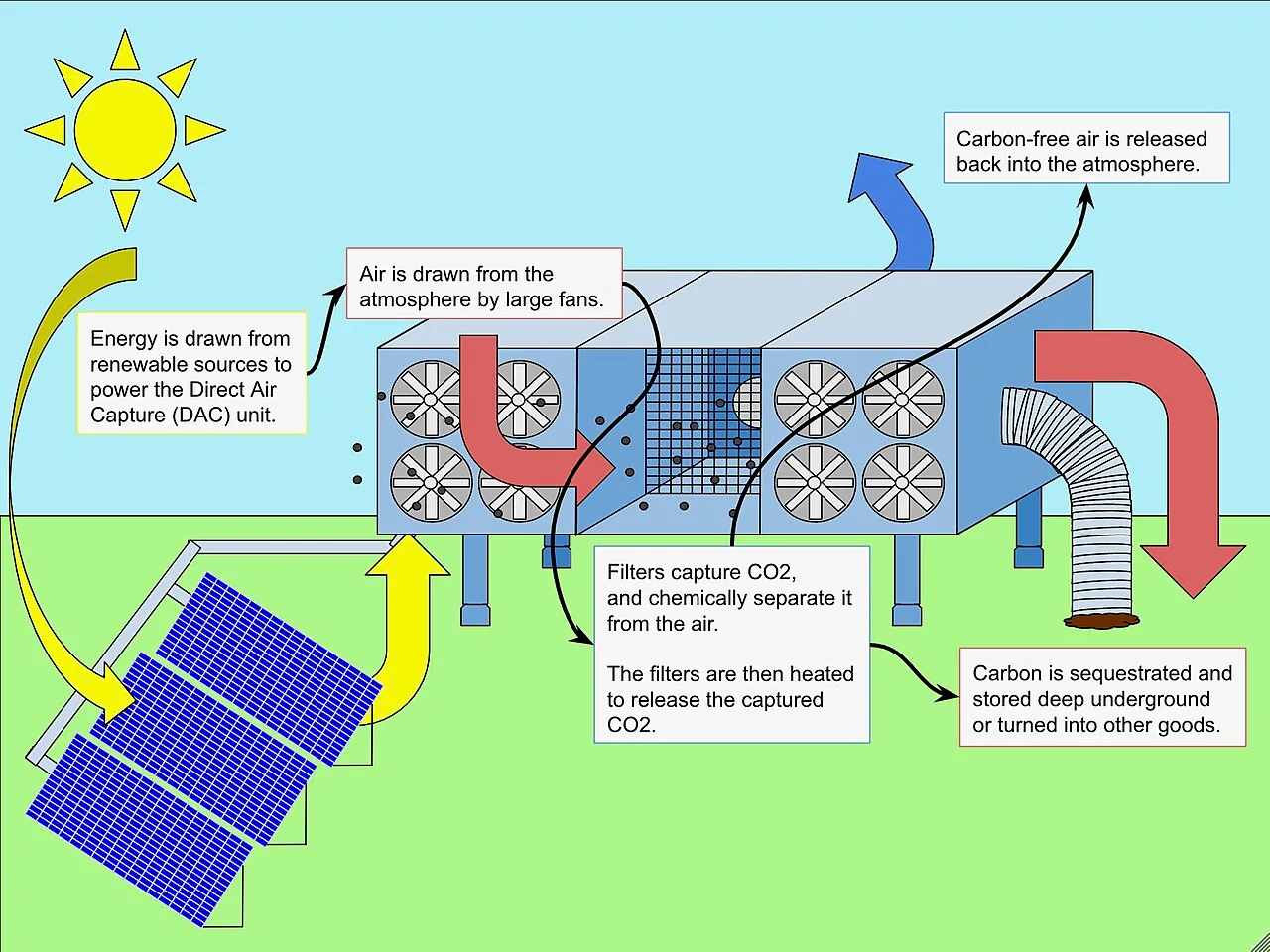
Planet Savers was founded in July 2023 as a University of Tokyo spinout and is led by chief executive Kyo Ikegami. It makes zeolite sorbents, porous materials that trap CO2, based on the university's research into zeolite synthesis, and designs the capture and concentration equipment around them. Zeolites tend to soak up water, and the company aims to overcome that problem, which it says will cut energy use and capture costs. Its systems run on electricity and are meant to sit close to the businesses that use the gas.
It is aiming at two markets. In the first, known as DACCU, captured CO2 is supplied to users such as greenhouse growers, concrete makers and producers of synthetic fuels and chemicals. Japan Startup Observer reported that the company sees demand growing as industrial decarbonisation shrinks Japan's supply of high-purity CO2. In the second, DACCS, captured CO2 is stored permanently underground to generate carbon-removal credits. For this, Planet Savers has signed a memorandum of understanding with an Australian carbon storage company covering projects in South Australia's Arckaringa Basin.
Pilots so far
The company has run an outdoor demonstration unit, called Phobos, on the Tokyo Bay waterfront under a Tokyo government project. In Fukui Prefecture it worked with Kansai Electric Power and a local partner to capture CO2 using zero-carbon electricity and feed it to a tomato greenhouse, and it has also tested a farm system in Hokkaido. Separately, Japan's state-backed NEDO is supporting its work on a high-efficiency CO2 concentration system through a deep-tech startup programme.
Who invested
ANRI led the round. The press release said HIRAC FUND was a new investor and that JAFCO had first invested in April 2024. Japan Startup Observer reported that Spiral Capital and JAFCO made follow-on investments, while DBJ Capital, HIRAC FUND and SG Incubate were new backers.
In comments included in the release, Spiral Capital said the technology had moved from the laboratory to a demonstration stage aimed at mass production, and JAFCO said the team had progressed from a concept to a working prototype. SG Incubate said a market for carbon credits from direct air capture was starting to form and that the company's sorbent could sharply reduce capture costs. HIRAC FUND said in its own announcement that it would help with introductions to regional banks and corporate partners and with fundraising strategy.
What the money is for
Planet Savers said it will use the money to improve and mass-produce its sorbents and to scale its capture systems to tens of tonnes of CO2 a year, while testing energy use, durability and stability. It also plans more pilots with CO2 users in Japan and abroad, including installation, operation and maintenance, and will hire in sorbent research, process design, engineering, business development and finance. Open roles include a chief of staff and a candidate for chief financial officer.
Including grants and subsidies, the company has raised more than ¥2.5bn (about $15.8m) since it was founded, according to the release. It mentioned an earlier seed round but did not give its size or date, and it did not disclose its headcount.
Company website: planetsavers.earth