Rendezvous Robotics, a company in Golden, Colorado, that builds spacecraft designed to assemble themselves in orbit, has raised $20m in a seed round led by MaC Venture Capital and Toyota Ventures. It announced the round on 28 October 2026 and described it as oversubscribed.
It is the company's first priced funding round. The University of Michigan Endowment made a significant investment, and Astera, the organisation co-founded by Jed McCaleb, and Industrious Ventures invested for the first time. Existing investors Aurelia Foundry, ATX Venture Partners and Mana Ventures also took part. The valuation was not disclosed.
“The vision behind TESSERAE was never simply to connect tiles in space. It was to rethink how we build beyond Earth,”Dr. Ariel Ekblaw, Co-Founder and Board Chair, Rendezvous Robotics
What Rendezvous Robotics does
Most spacecraft are designed around what fits inside a rocket's nose cone, which limits the size of solar arrays, antennas and radiators. Rendezvous launches its spacecraft as compact, independent tiles that move, line up and connect once in orbit. They can be assembled into larger structures and rearranged after launch for new missions.
Via Satellite reported that the tiles are hexagonal, about three feet across, and use electromagnets to move and to latch together, creating a power and data connection. Chief executive and co-founder Joe Landon told the publication that the company builds the magnets and core assembly systems itself and will work with partners on payloads and propulsion.
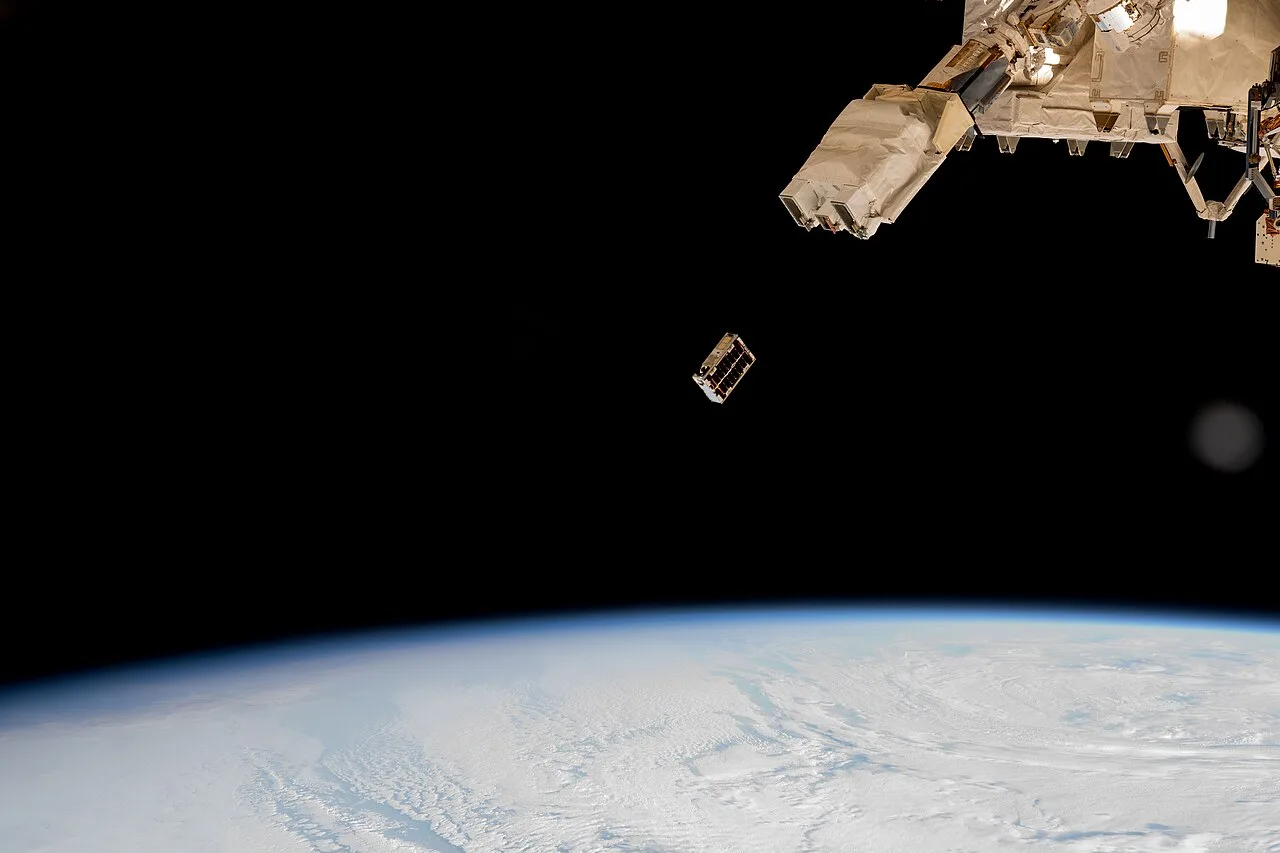
The technology grew out of TESSERAE, a self-assembly system invented by co-founder Ariel Ekblaw at MIT and developed further at the Aurelia Institute, which she founded. Earlier versions have flown on Blue Origin's New Shepard rocket and on two missions to the International Space Station.
A shift in focus
Via Satellite reported that Rendezvous came out of stealth last year with a focus on assembling large antennas, solar panels, manufacturing sites and habitats in space. It has now narrowed its focus to more capable and flexible spacecraft for missions such as remote sensing and communications, where Landon said there is an urgent need from commercial and government customers.
Landon told Via Satellite that a modular spacecraft could be repaired by launching a single replacement tile rather than building a new satellite.
Missions ahead
The new money will pay for the company's next generation of spacecraft, flight demonstrations and more staff. Ground tests of autonomous movement and assembly are under way.
According to Via Satellite, Rendezvous plans a parabolic flight campaign in November 2026 to test its electromagnetic actuation in microgravity. In December, a final demonstration of the TESSERAE research programme on the International Space Station is due to show 32 tiles assembling into a three-dimensional structure.
The company's main milestone is a mission in 2028, when seven independent tiles are due to join into one spacecraft, separate and reassemble in a different shape. Via Satellite reported that Rendezvous has booked a rideshare launch for no earlier than April 2028.
Company website: rdvrobotics.com