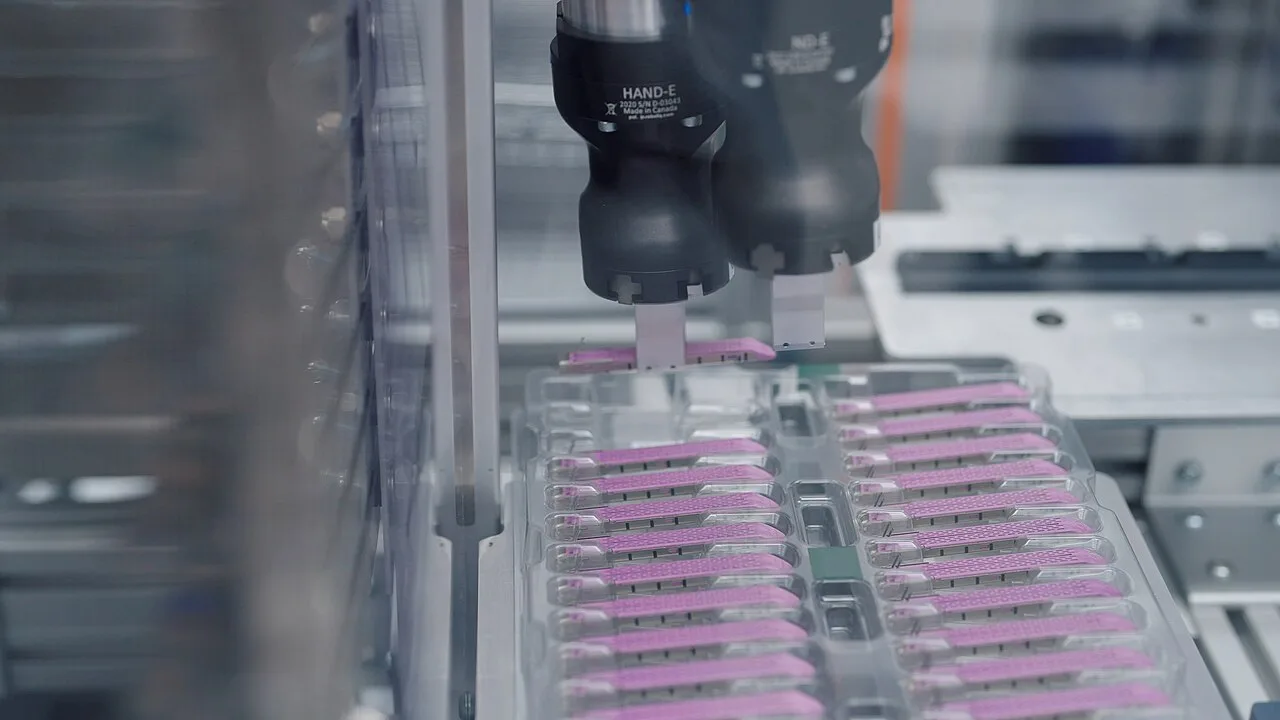
Strive Robotics, a company in the Boston area that builds robots for factories making many different parts in small batches, raised more than $3m in pre-seed funding, it announced on 5 November 2026.
Hi Ventures led the round. Grid Capital, Tenon Ventures and Thin Capital also invested, along with other investors the company did not name. Strive did not disclose a valuation or the exact size of the round.
The company's announcement gives its base as Cambridge, Massachusetts, although the release was datelined Boston and Dealroom News described it as Boston-based.
“Our goal is not to replace the factory infrastructure that already works,”Paul Guiloff, co-founder and CRO, Strive Robotics
What Strive Robotics does
Strive targets high-mix manufacturing, where the parts, jobs and specifications on a production floor change often. Fixed automation, which is designed around one repeated task, is hard or costly to set up in such plants, so much of the work is still done by people.
Rather than automating a single motion, Strive is trying to automate the whole routine around a machine. According to the company, that includes preparing fixtures, moving materials, loading and unloading parts, running machine controls, checking the results and deciding when a person needs to step in.
The robots are designed to use equipment a factory already has. They can press buttons, open doors and work the control panels on existing machines, so a manufacturer does not have to rebuild its floor around them. Strive's system combines robotic manipulation with workflow software, specialised tooling and the ability to operate machine interfaces.
Learning on the job
Strive is developing a feature it calls Apprentice Mode, which Dealroom News described as a way for robots to learn a workflow by watching an operator demonstrate it, rather than being programmed one task at a time. The company has not said when it will be available or how well it works in practice.
"Our goal is not to replace the factory infrastructure that already works," said co-founder Paul Guiloff, the company's chief revenue officer. He said Strive wants robots capable of working inside that infrastructure and flexible enough to take on jobs that manufacturers have struggled to automate. Guiloff argued that high-mix work still depends on people because the workflows keep changing.
Who is behind it
Strive was founded by three MIT alumni: chief executive Craig Cheney, chief technology officer Geehoon Park and Guiloff. The company said the team has experience in robotics, engineering, product development and building industrial businesses, but it gave no further detail on their earlier roles. It did not disclose its founding year or headcount.
What the money is for
Strive said it will spend the funding on product development, hiring and deployments with manufacturers as it moves from prototypes to robots that run continuously in production. It is expanding its engineering team ahead of that next phase.
The company said it is already working with manufacturers to find processes that mix repetitive work with enough variation that automation could raise output, add capacity or allow extra shifts. Its early focus is on jobs where skilled workers spend much of their time tending machines. Strive did not name any customers, give a number of deployments or publish performance figures.
Company website: striverobotics.ai