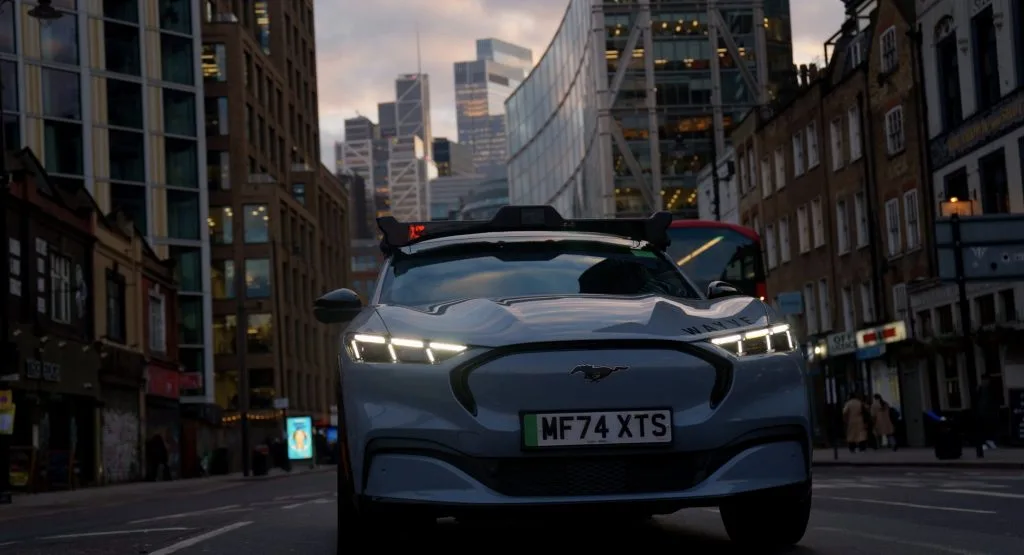
Wayve, the London company that builds AI software for self-driving cars, said on 25 February 2026 that it had raised $1.2bn in a Series D round at a post-money valuation of $8.6bn.
Eclipse, Balderton and SoftBank Vision Fund 2 led the round. Uber also agreed to invest further milestone-based capital to expand robotaxi services that use Wayve's software. Wayve said that commitment sat within a wider $1.5bn of capital secured for its commercial rollout. Dealroom reported that Uber's additional investment would be up to $300m, tied to deployment targets and released over the coming years.
The company said the money would move it from AI research to large-scale commercial deployment, with robotaxi trials beginning in 2026 and consumer cars carrying its software from 2027.
“With $1.5 billion secured, we are building for a total addressable market that spans every vehicle that moves. Autonomy will not scale through city-by-city robotaxi deployments alone. It will scale through a trusted platform that automakers and fleets can deploy globally and improve continuously. This investment accelerates our path to widespread commercial deployment and positions us to build the autonomy layer that will power any vehicle, anywhere.”Alex Kendall, Co-Founder and CEO, Wayve
What Wayve does
Wayve develops what it calls embodied AI for driving: a single end-to-end model that takes in sensor data and controls the vehicle, rather than a stack of hand-coded rules. The company said it began applying this approach to autonomous driving in 2017.
It does not build its own cars. Wayve licenses its software, the AI Driver, to carmakers and gives them tools to adapt the driving model to particular vehicles and brands. The system runs on the car's own computer and sensors and does not depend on high-definition maps or engineering specific to each city. Wayve argues that partnering with manufacturers and ride-hailing platforms, instead of operating its own fleet, lets it expand with less capital.
In the past year, the company said, its software drove in more than 500 cities across Europe, North America and Japan without being tuned for each city first. It said its foundation model was trained on data from more than 70 countries.
Who invested
Beyond the three lead investors, the round brought in new money from Ontario Teachers' Pension Plan, Baillie Gifford, the British Business Bank, Icehouse Ventures and Schroders Capital, along with other institutional investors that were not named.
Microsoft, NVIDIA and Uber took part as strategic investors. Mercedes-Benz, Nissan and Stellantis also invested. Dealroom described the round as Wayve's first direct investment from carmakers.
Seth Winterroth, a partner at Eclipse, said his firm first backed Wayve in 2019, when its end-to-end approach was seen as contrarian. Balderton general partner Suranga Chandratillake said the firm had supported the company since its early days in Cambridge.
What the money is for
The first commercial use will be robotaxis. Wayve and Uber plan to launch their first service in London in 2026 and to expand to more than 10 markets. Under the arrangement, Wayve will supply its AI Driver for L4-capable vehicles made by partner carmakers, while Uber will own and run the fleet.
From 2027, Wayve expects buyers to be able to purchase passenger cars equipped with its software, starting with L2+ hands-off driving, in which the car steers and responds to traffic while the driver supervises. The company said its platform is designed to stretch from that level up to L3 and L4 eyes-off driving across brands and markets.
"With $1.5 billion secured, we are building for a total addressable market that spans every vehicle that moves," said Alex Kendall, Wayve's co-founder and chief executive.
The funding so far
Wayve's previous large raise was a $1.05bn Series C led by SoftBank Group, with NVIDIA and Microsoft taking part, according to Coverager. Dealroom reported that the Series D brought Wayve's total funding to $2.5bn. The company itself did not give a figure for the total raised to date, and it did not disclose its headcount.
Company website: wayve.ai