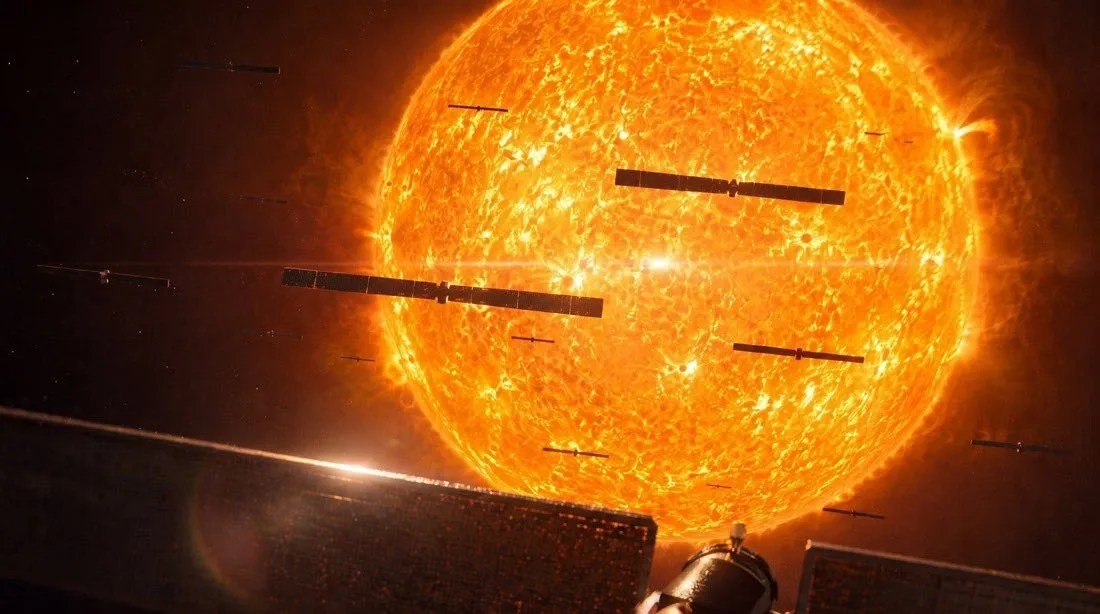
Zero Industries, a space start-up that wants to sell power to satellites by beaming it to them with lasers, has raised $3m (about ¥470m) in a pre-seed round led by Maezawa Fund. The company announced the round on 22 October 2026.
UntroD Capital Japan, NOW and Midtown also invested, along with individual investors, according to the company's release. Zero Industries did not disclose a valuation.
The company is registered as a public benefit corporation in the United States and gives San Francisco as its base. It also has a Japanese subsidiary, Zero Industries Japan, set up on 24 March 2026, and it said it closed the round six months after its founding.
What Zero Industries is building
Its first product, called Helios, is a power transmission service for satellites. Helios Beam would be a transmitter satellite that generates power in space and sends it by laser, Helios Cell a receiver module fitted to customers' satellites, and Helios Grid the system that manages where power goes.
The company argues that satellites that rely on their own solar panels lose power while they pass through Earth's shadow. Supplying power from outside, it says, would let operators carry less weight in panels and batteries and use that weight for instruments, computers or propulsion. Its design goals are to send power to satellites hundreds of kilometres away and to supply several satellites from one transmitter, and it says it will test whether that beats the cost of satellites generating their own power once losses, equipment weight and operating costs are counted.
Zero Industries said its first customers would be Earth observation satellites, orbital transfer vehicles and servicing craft, followed later by data centres in space, orbital factories and bases on the Moon. The release also sets far longer-range goals, including ending the need for power generation on Earth by 2035.
The team and the plan
The company is led by founder and chief executive Kai Sugihara, who is 16, with co-founders Yusei Fujii, 19, as chief technology officer and Koya Tani, 20, as chief operating officer. The release says Sugihara has been involved in founding or running seven businesses since primary school, and that Fujii entered the University of Tokyo's engineering faculty. Its advisers include engineers who worked on space-based solar power at Mitsubishi Heavy Industries and a former JAXA official.
Zero Industries is running joint research on laser power transmission with the Fujita laboratory at the Graduate School for the Creation of New Photonics Industries in Hamamatsu, The Bridge reported. Between autumn 2026 and spring 2027 it plans to evaluate receiver components, carry out a kilometre-scale outdoor power-transmission test and fix the specifications for an orbital demonstrator. It aims to show satellite-to-satellite power transfer with a first unit in 2030 before launching commercial transmitter satellites.
The company did not say how it will spend the money. It said the schedule and investment allocation will be updated based on test results, commercial viability and production capacity.
Who invested
Maezawa Fund said in the release that it led the round because of how quickly the team had grown and turned what it learned into action, and that it would back the company over the long term. UntroD Capital Japan director Mizuki Komasa said the firm would support the company from technology development through to finding customers.
Zero Industries said its round is the largest disclosed pre-seed raise among the Japanese start-up cases it compared, a claim based on its own survey as of 9 October 2026 rather than a full ranking.
Company website: zero.space