Axya, a Montreal company that sells AI-based procurement software to manufacturers, announced a C$17m (about $12.3m) Series A on 24 September 2026. According to BetaKit, the round consisted of C$12m in equity and C$5m in venture debt from CIBC Innovation Banking.
Toronto-based McRock Capital led the equity portion, with participation from Yamaha Motor Ventures. Existing shareholders the Business Development Bank of Canada's Industrial Innovation Venture Fund and Real Ventures also backed the round.
Chief executive Félix Bélisle-Dockrill told BetaKit that the round was an up round and brought Axya's total funding to C$22.4m (about $16.2m). He did not disclose the valuation.
“We see an enormous market opportunity for industrial AI in the everyday work that keeps factories running. Manufacturing procurement is a prime example, where critical decisions still depend on scattered information.”Udit Bhatnagar, Partner, McRock Capital
What Axya does
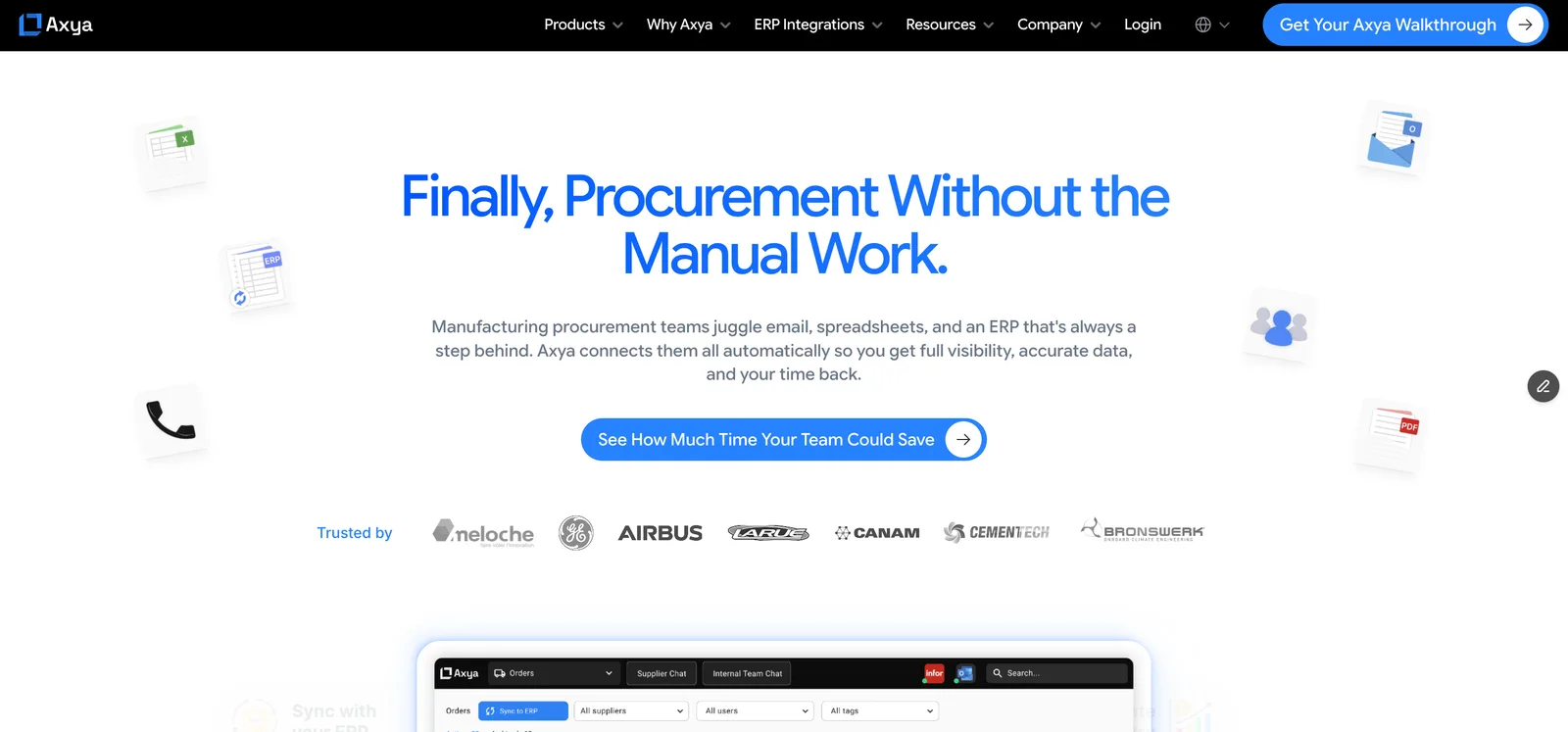
Axya's platform automates sourcing and purchasing work for manufacturers that build complex products. It connects to enterprise resource planning (ERP) systems from Infor, Epicor, Oracle, SAP, Microsoft Dynamics and Sage, and uses AI to normalise data, flag supplier risks early and identify savings. Procurement staff stay in control of decisions, and suppliers can take part through the file formats and channels they already use rather than a new portal.
The company focuses on three sectors: aerospace and defence, custom machinery and vehicles, and natural resources and processing. Its customers include MDA Space and GE Aerospace. BetaKit reported that Axya has more than 80,000 suppliers in its network and that Bélisle-Dockrill put its annual recurring revenue in the multi-million-dollar range.
Bélisle-Dockrill, a mechanical engineer, previously worked in supplier quality at two large aerospace manufacturers. He founded Axya, formerly known as GRAD4, in 2019, according to BetaKit.
In the announcement, Bélisle-Dockrill said procurement remained one of the most fragmented functions inside manufacturing companies despite large investments in digital transformation. He said Axya connects the data, suppliers and workflows behind purchasing decisions so that manufacturers can reduce manual work, get faster responses from suppliers and build more resilient supply chains.
What the money is for
Axya said it would invest in AI features for risk detection, optimisation and automated workflows, and hire across sales, customer success and engineering. BetaKit reported that the company plans to grow its 40-person team to 55 by the end of 2026.
The company also plans to strengthen its presence in North America, especially the US, expand internationally and broaden its ERP partnerships and partner programmes. BetaKit reported that the venture debt from CIBC Innovation Banking will support working capital and product development.
Bhatnagar told BetaKit that AI had become central to what the product can do over the past 12 months and that this progress was showing up in Axya's commercial results.
Who invested and the funding so far
Udit Bhatnagar, a partner at McRock Capital, is joining Axya's board as part of the round, according to BetaKit. He told the publication that Axya had doubled its annual recurring revenue year on year while posting net revenue retention of close to 140%.
Before this round, Axya raised C$5.4m in seed funding, made up of an initial C$1.5m round and a C$3.9m extension, BetaKit reported. The Series A came more than four years after the seed funding closed.
Bélisle-Dockrill told BetaKit the company raised on what he called fundamentals, citing customer retention, healthy margins and a business operating close to break-even.
Company website: axya.co