Qluster, a Paris startup developing quantum computers that run on light, said on 17 November 2026 that it had raised €4.7m (about $5.2m) in a pre-seed round led by Quantonation, an investor that specialises in quantum and physics-based technology.
Quantum Launchpad and the French public investment bank Bpifrance also supported the round, which the company described as its first. No valuation was disclosed.
Qluster was founded only a few months before the announcement, according to the release. It has already won the 2026 i-Lab Grand Prize, a French innovation competition supported by the France 2030 programme.
“For several years, the race to build quantum computers has largely focused on developing increasingly powerful qubits. But the challenge today is to ensure that the computing architecture can meet the needs of industry.”David Fainsin, co-founder and CEO, Qluster
What Qluster is building
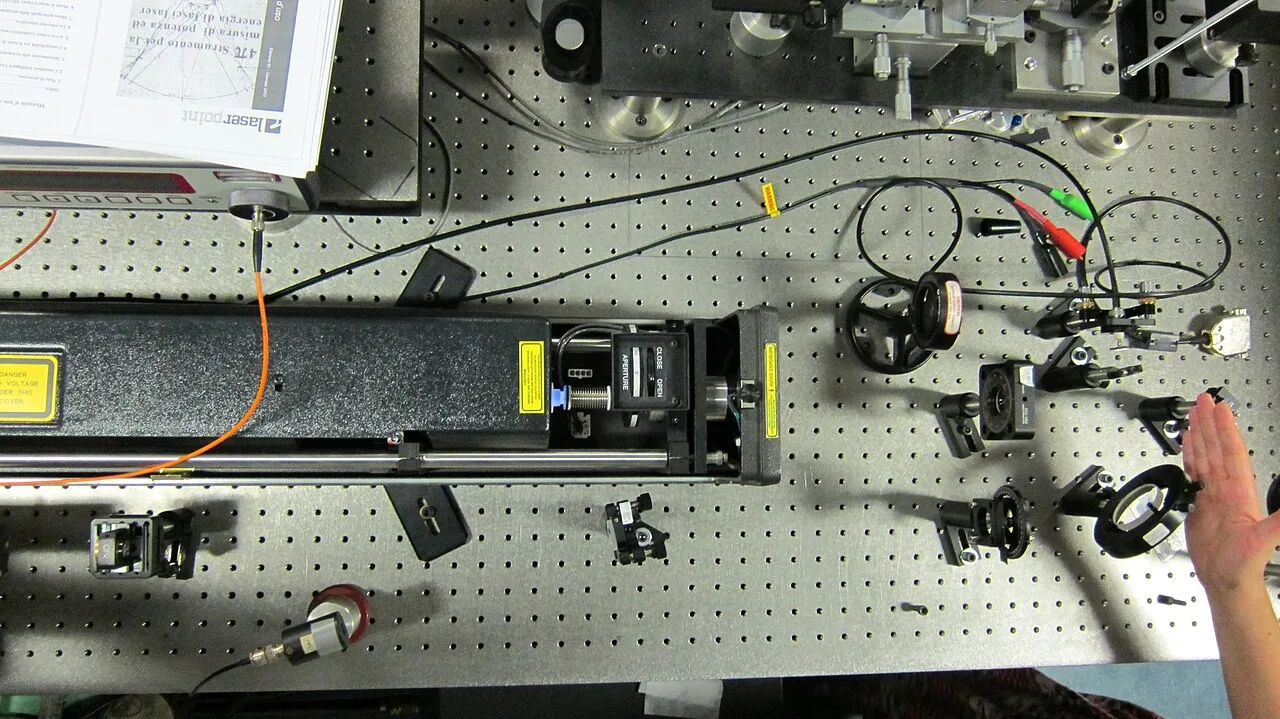
The company is a spinout of Laboratoire Kastler Brossel, a Paris physics laboratory linked to three Nobel Prizes. It works on continuous-variable photonic quantum computing, which encodes information in continuous properties of light and generates entangled states, known as clusters, that serve as the resources for quantum operations. Qluster said the approach can handle large numbers of quantum modes at room temperature, which should make machines easier to scale and stabilise.
Its starting point is a patented miniature photonic source developed at the laboratory by co-founders Valentina Parigi and David Fainsin. The principle behind it has been validated in experiments and published in a scientific journal, the company said.
An 'Architecture First' approach
Rather than begin with a qubit technology and build a machine around it, Qluster translates business problems into quantum circuits and works out what they would need in qubits, circuit depth, speed and energy. It then designs the computer to meet those requirements. The company said this method has drawn heavy investment in North America and Japan but is less developed in Europe.
Chief executive David Fainsin acknowledged in the release that the approach does not remove the scientific and engineering hurdles to a reliable quantum computer, but said photonics plays to European strengths and offers good prospects for scale.
Qluster aims to build an intermediate-scale quantum computer able to tackle early industrial problems by 2032, and a large, fault-tolerant universal machine by 2036.
Who is behind it and what the money is for
The four founders are Fainsin and chief technology officer Ambroise Boyer, both with doctorates in quantum optics; chief operating officer Clarisse Thibault, who previously worked at CNRS Innovation; and Parigi, a Sorbonne University professor who chairs the scientific advisory board. Quantum Launchpad and Agoranov have supported the company since it started.
The money will pay for Qluster's own research laboratory to improve its photonic technology and for hiring experimental physicists and specialists in quantum computing theory and architecture, so that hardware and system design can advance in parallel.
Ylan Tran, an investor at Quantonation, said scalability is the main challenge in quantum computing and that Qluster's architecture could point towards very large numbers of qubits working at room temperature inside existing data centres. Tech.eu, which also reported the round, described Qluster's aim as a universal, fault-tolerant machine for complex industrial problems.
Company website: qluster.co