Salience Labs, an Oxford company that makes photonic chips for networking inside AI data centres, said on 14 October 2026 that it had closed an oversubscribed $125m Series B round.
Bullhound Capital led the round, and Bullhound principal Callum Stewart is joining Salience's board. AMD Ventures, Intel Capital, SBI Group, Hudson River Trading and the British Business Bank invested for the first time, and existing shareholders Applied Ventures, Oxford Science Enterprises, Cambridge Innovation Capital and Silicon Catalyst Ventures also took part.
The company did not disclose its valuation or how much it had raised before this round.
“OCS will play a critical role in AI datacenter networking. As customers roll out optical links in their datacenters, high-performance optical switches are needed to deliver the token economics that workloads demand. Salience Labs has demonstrated a market-leading technology: a fully integrated on-chip solution that scales well to high-volume manufacturing.”Vaysh Kewada, CEO and co-founder, Salience Labs
What Salience Labs does
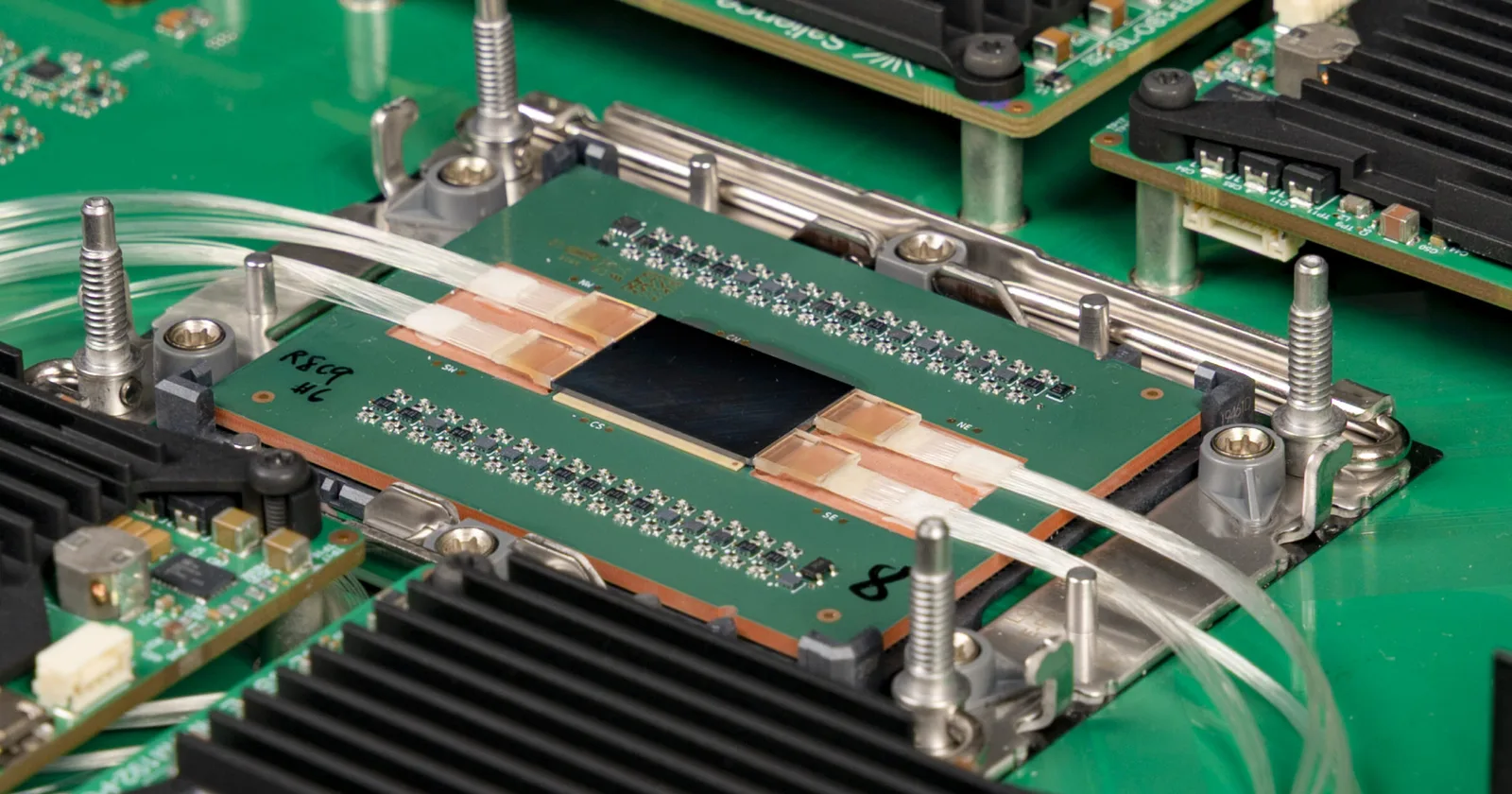
Salience builds optical circuit switches, which route data between ports as light rather than converting it into electrical signals. Its all-optical, fully integrated switch is designed to connect thousands of GPUs across several racks, the so-called scale-up network that lets many chips act as one system.
The round follows a live demonstration of its 64-port all-optical switch at the ECOC 2026 conference, which the company described as an industry first for silicon photonics optical circuit switching. Intel Capital managing director Srini Ananth said Salience stands out for its integrated silicon photonics design and its own optical amplification technology.
Founded in 2021, Salience is built on more than ten years of silicon photonics research at the University of Oxford and the University of Münster in Germany. Vaysh Kewada is chief executive and co-founder. The company has not disclosed its headcount.
What the money is for
Salience said it will use the money to deploy its switches with customers, move into high-volume manufacturing, and develop 128-port and 256-port versions. It will keep working with Keysight Technologies and Tower Semiconductor on scaling production.
The company also plans to grow in the US, building out its Silicon Valley offices and opening a second West Coast location, and to enter new geographic markets. The company says it is hiring for the new offices. It is showing its technology at the PECC Summit in Sunnyvale, California, on 20 and 21 October.
Kewada said customers rolling out optical links in their data centres need fast optical switches to get the token economics their workloads demand, and that the funding, with the backing of AMD Ventures and Intel Capital, would speed the company's move into high-volume production.
Who invested and why
The presence of two large chipmakers' venture arms stands out. Patrick Rundell, a director at AMD Ventures, said AI infrastructure is now designed at rack scale, where networking directly affects system performance, efficiency and cost, and that AMD would support Salience as it scales its technology and manufacturing.
Salience points to market forecasts to explain investor interest. Dell'Oro Group expects cumulative spending on data centre switches in AI back-end networks to approach $1tn between 2026 and 2030, with scale-up networks projected to make up more than half of that market by 2030.
Company website: saliencelabs.ai